

Photo Story
What Remains
There is a particular feeling that comes with entering a place you are not supposed to be. Monte Palace opened as Portugal's best hotel in 1989 and closed eighteen months later. I climbed in through a gap in the fence thirty years after that, camera in hand, and spent two hours inside a ruin that still knew how to catch the light.
Photographs by Darren Pellegrino
There is a particular feeling that comes with entering a place you are not supposed to be. Part alertness, part guilt, part something harder to name. I felt all of it climbing into Monte Palace for the first time, stepping over broken glass and past the warning signs, letting my eyes adjust to the dark.
The building had been closed since November 1990. Thirty years of weather and graffiti and silence had done their work on it. The balconies that once curved elegantly above a lobby full of guests now rose above a floor of debris, each level tagged and layered with names that meant nothing to me and everything to whoever put them there. The ceiling had given way in places. The elevator shafts dropped open into darkness. I watched where I stepped and tried not to think too hard about the floors above.
What I did not expect was the light. It came through the broken roof and the open corridors in ways that felt almost deliberate, falling in shafts and pooling at doorways, turning every opening into something worth photographing. Monte Palace had been designed to make the most of its position on the crater rim at Miradouro Vista do Rei, perched above the blue and green lagoons of Sete Cidades. Even in ruin the building knew how to frame a view.
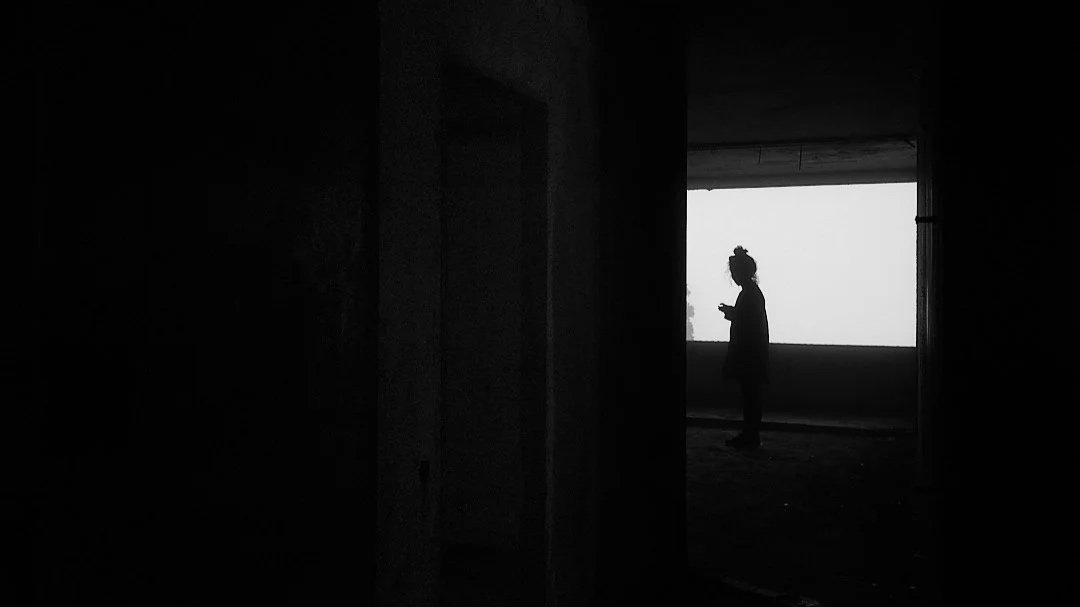
The other explorers moved through the space as silhouettes. I never got close enough to speak to any of them. They appeared at the end of corridors, stood briefly in doorways, leaned against walls in the half dark and then moved on. In the dim light of a building that opened as Portugal's best hotel and closed eighteen months later, they looked exactly like what the place needed. Not intruders. Remnants. Figures from an era the building was still trying to hold onto.
I stayed longer than I planned to. That is usually how it goes in places like this. The eeriness does not drive you out. It pulls you further in, room by room, floor by floor, until the light outside starts to change and you realize you have been inside a ruin for two hours thinking about a hotel that no one could fill.
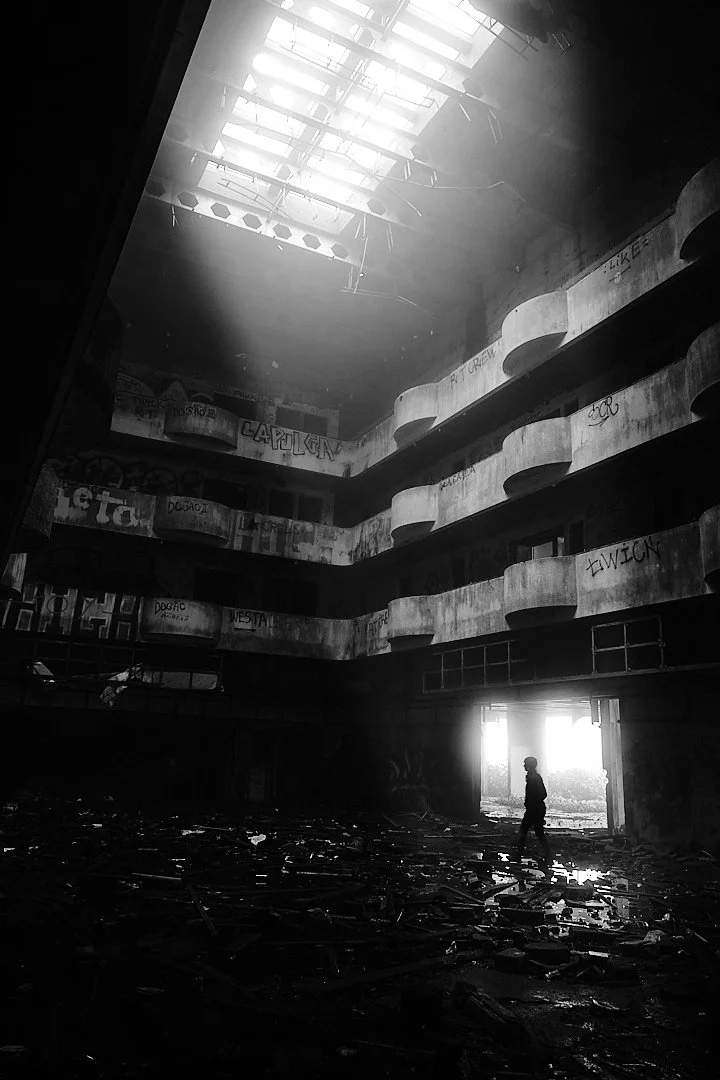
From the inside, the building still has the bones of what it was. The balconies curve in on themselves the way a luxury hotel balcony should, each floor stacked above the last in a shape that once held 88 rooms, two restaurants, a nightclub, and a bank. Light falls through the broken ceiling in a single column. A figure moves through the debris on the ground floor, small against all that concrete, heading toward the light at the far end. The place opened on April 15, 1989. It closed eighteen months later. Bankruptcy. Low occupancy. A tourism industry that was not yet ready for five stars on the edge of a volcano.
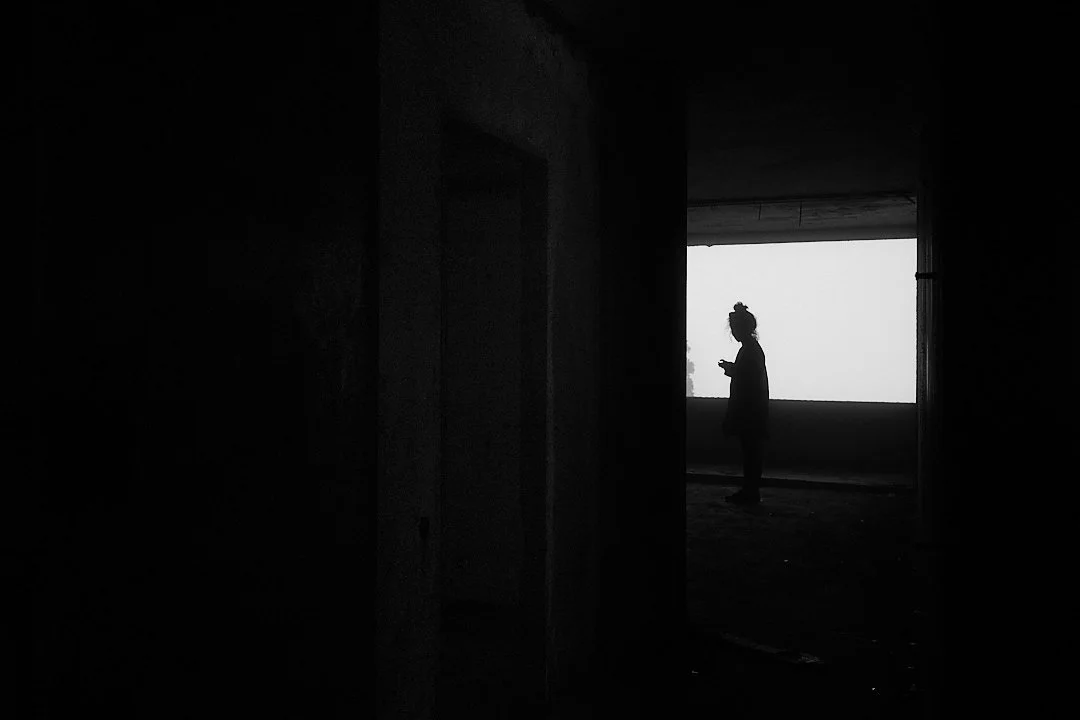
A doorway with nothing left in it. The room it once led to is gone or emptied or both. She stands in the frame of it, looking at whatever is on the other side, her shape cut clean against the white sky. The building was named Portugal's best hotel the year it opened. Within two years it was this. A frame with no picture in it. A door that goes nowhere.
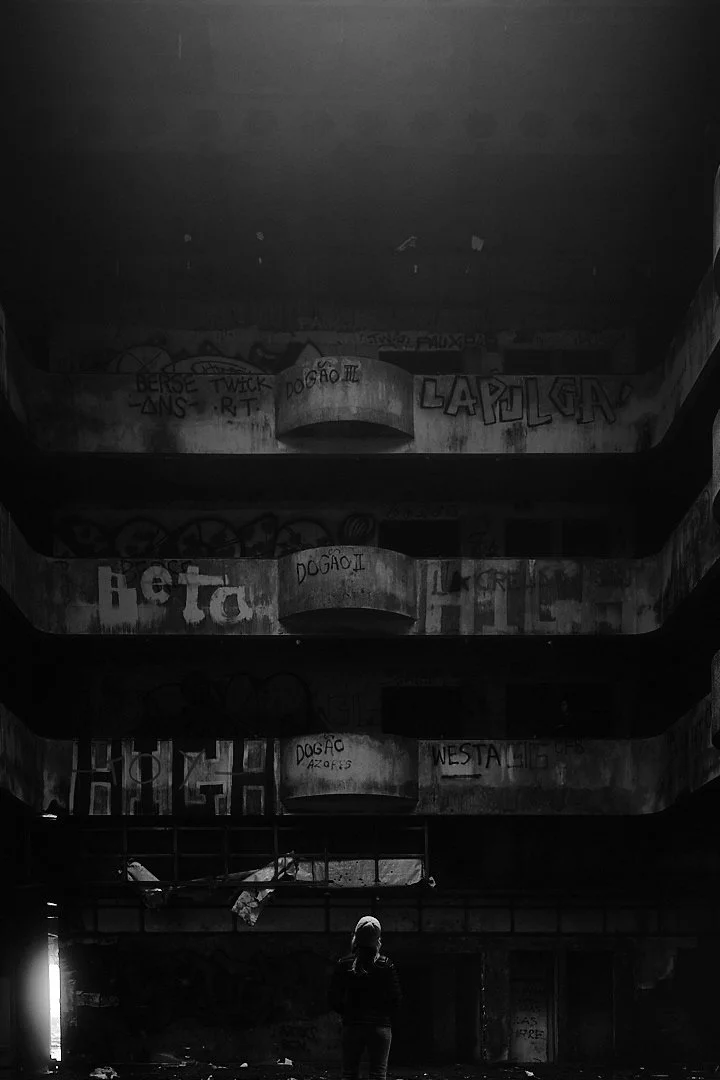
The graffiti has become its own kind of interior design. Names, crew tags, dates, overlapping and layered until the original concrete is barely visible. They are all still here, fixed to the walls of a building that outlasted its own purpose and found a new one.
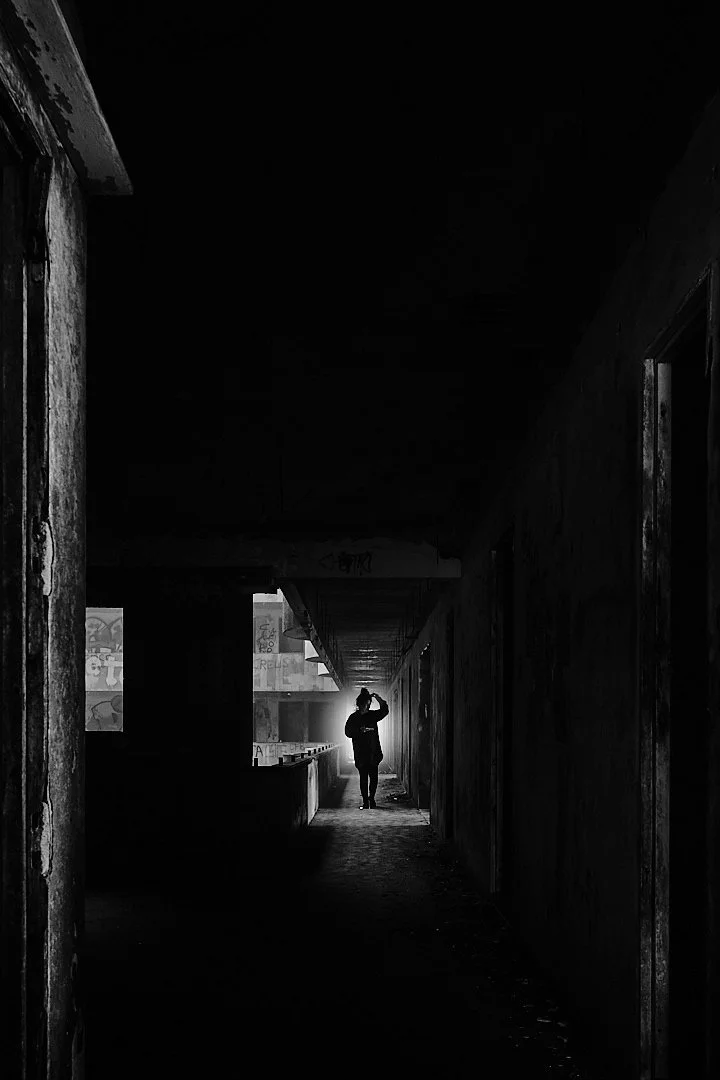
The further you go into the building the darker it gets. The corridors narrow and the graffiti thickens and the floor becomes uncertain underfoot. At the far end, where the corridor turns, a figure stands in a circle of light, one hand raised to the wall. You walk toward the light because there is nothing else to walk toward. That is the logic of the place. That is the logic of most places like it.
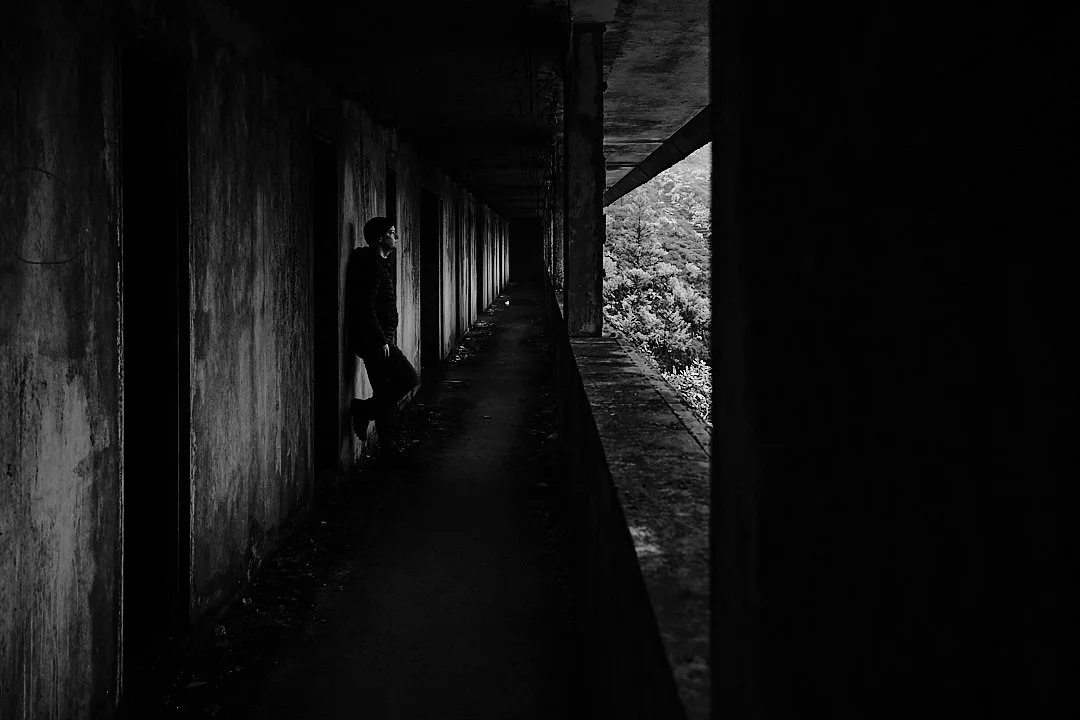
The corridors run the length of each floor, open on one side to the hillside and the trees that have grown up around the building in the decades since it closed. He stood against the wall and looked up at the light coming in from outside, unhurried, the way you stand in a place that demands a certain stillness from you. The warning signs at the entrance said entry forbidden. Nobody inside seemed to have read them.
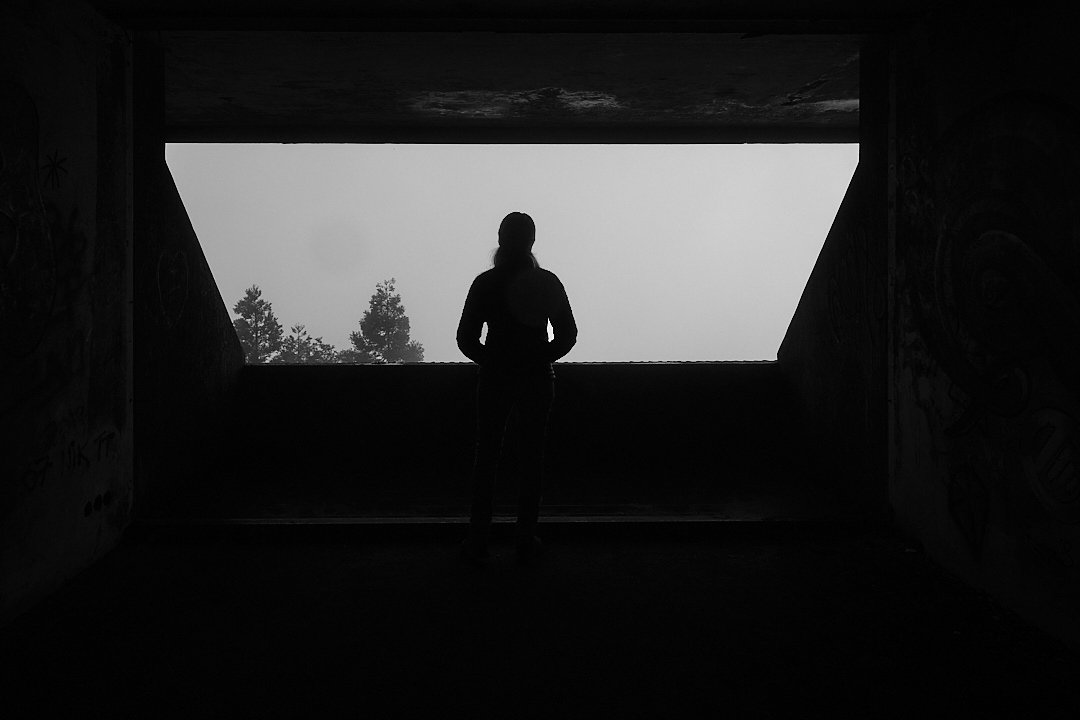
From the upper floors you can still see why someone built a hotel here. The view is exactly what it was promised to be — open sky, the curve of the crater, the trees below still growing into the space the building left behind. She stood at the edge for a long time. The elevator shafts behind her were open. The railings were gone. The ceiling above held, for now. Outside, the Azores went on being exactly as beautiful as it always was, indifferent to the ruin at its edge.
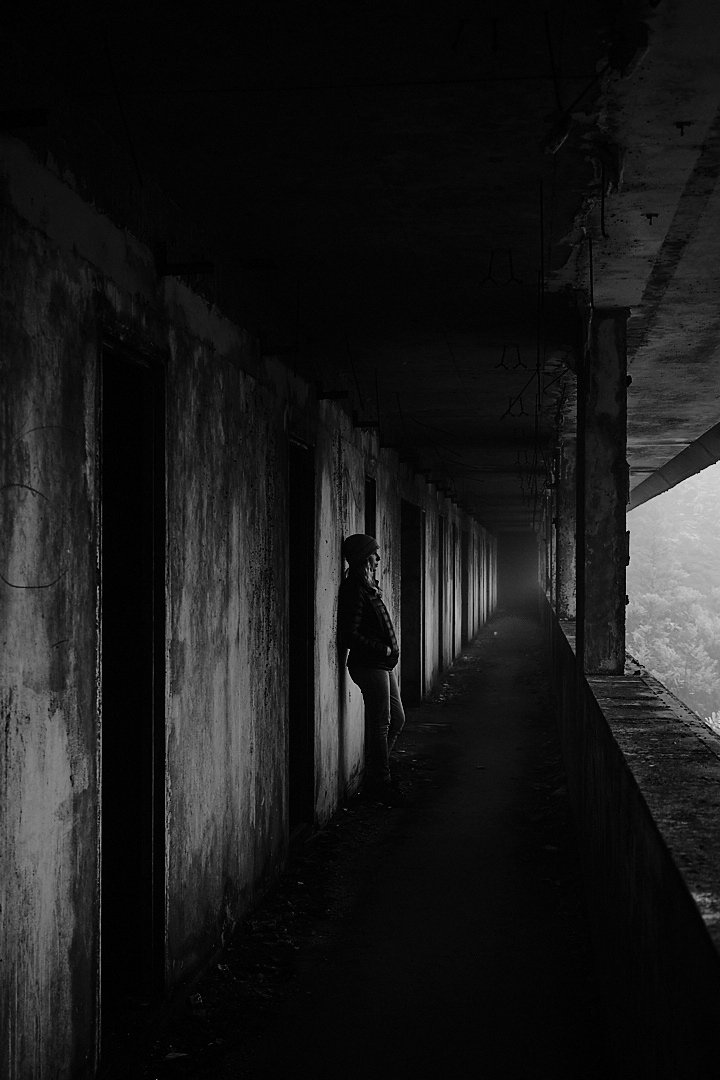
She stood at the edge of the corridor where the concrete ended and the open air began. The fog that rolls in off Sete Cidades lake was somewhere behind her, out past the trees, out past the crater rim where Monte Palace sits at the Miradouro Vista do Rei. On a clear day you can see the blue and green lagoons from up here. On this day there was only the building and the light and the quiet.
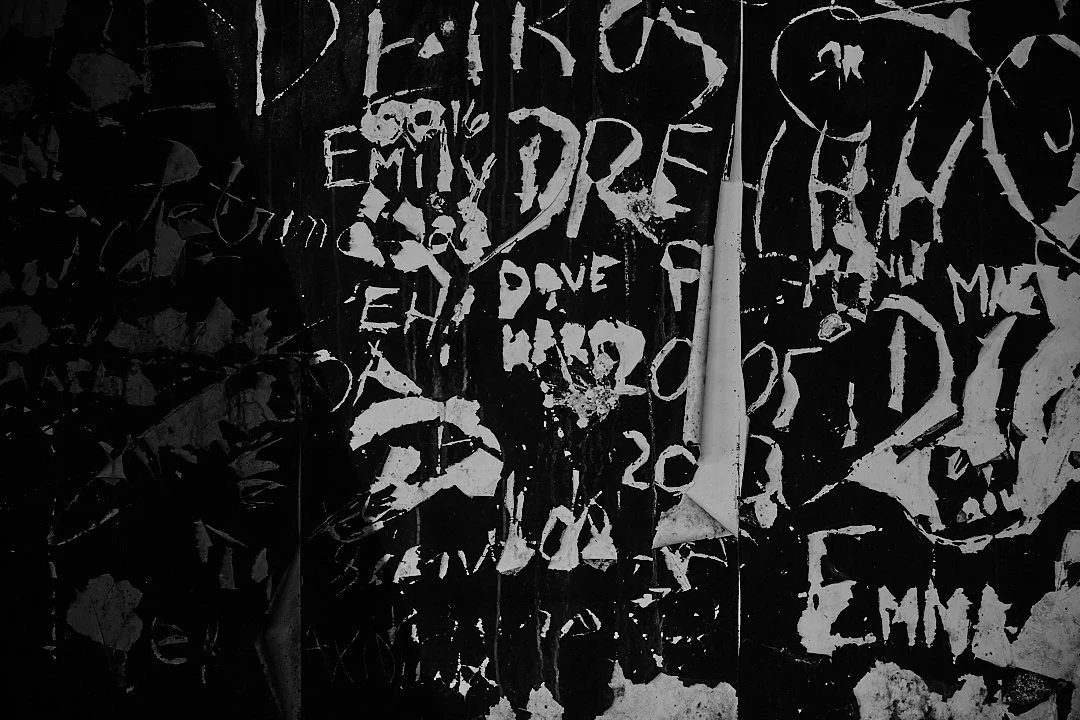
The names came first. Before the explorers, before the photographers, before the legend of the place spread across the internet, someone climbed through a gap in the fence and wrote their name on the wall. Then another person did the same. Then hundreds more. The walls of Monte Palace are covered in this way, floor to ceiling, every surface a record of everyone who came to see what was left.