

Photo Story
Where the Dunes Meet the Sea
On the edge of Lençóis Maranhenses National Park in the Brazilian state of Maranhão, the povoado of Travosa sits between one of the world's most otherworldly landscapes and the open Atlantic. The dunes are enormous and indifferent. The village is small and determined. The people who live there have built their lives in the space between, fishing the sea, herding goats across white sand, raising children in streets made of the same dunes that draw visitors from across the world. This is a story about that life. Quiet, hard, and entirely its own.
Photographs by Darren Pellegrino
Travosa is not a place you pass through on the way to somewhere else. It sits at the edge of Lençóis Maranhenses National Park in the Brazilian state of Maranhão, where the white dunes of the park dissolve into the fishing villages of the Atlantic coast. There are no hotels here. No restaurants built for outsiders. Just a povoado, a small rural settlement, that has existed quietly alongside one of the most extraordinary landscapes on earth, largely on its own terms.
The dunes are the first thing you see and the last thing you forget. They rise out of the flat coastal land without warning, white and enormous, shaped by wind into forms that change with the season. Between them, when the rains come, lagoons form in the valleys, blue and clear and cold. The people of Travosa have lived beside all of this long enough that it no longer surprises them. The dunes are not a wonder. They are a landmark, a grazing ground, a road.
I spent two days in the village, moving slowly, speaking Portuguese with whoever would talk to me. An old man stood in his doorway with a cat at his feet and told me the young ones were leaving. A woman who had seen most of a century sat still while I photographed her and asked nothing in return. Children played in the lagoons and the sandy streets with the particular freedom of kids who have not yet been told that where they come from is remarkable.
The fishing is hard. The land gives back what it chooses. The dunes shift and the lagoons come and go with the rains. But Travosa stays. The people here have not survived this place by fighting it. They have survived by learning to move with it, the same way the herder moves his goats across the dunes each morning, not against the landscape, but through it.
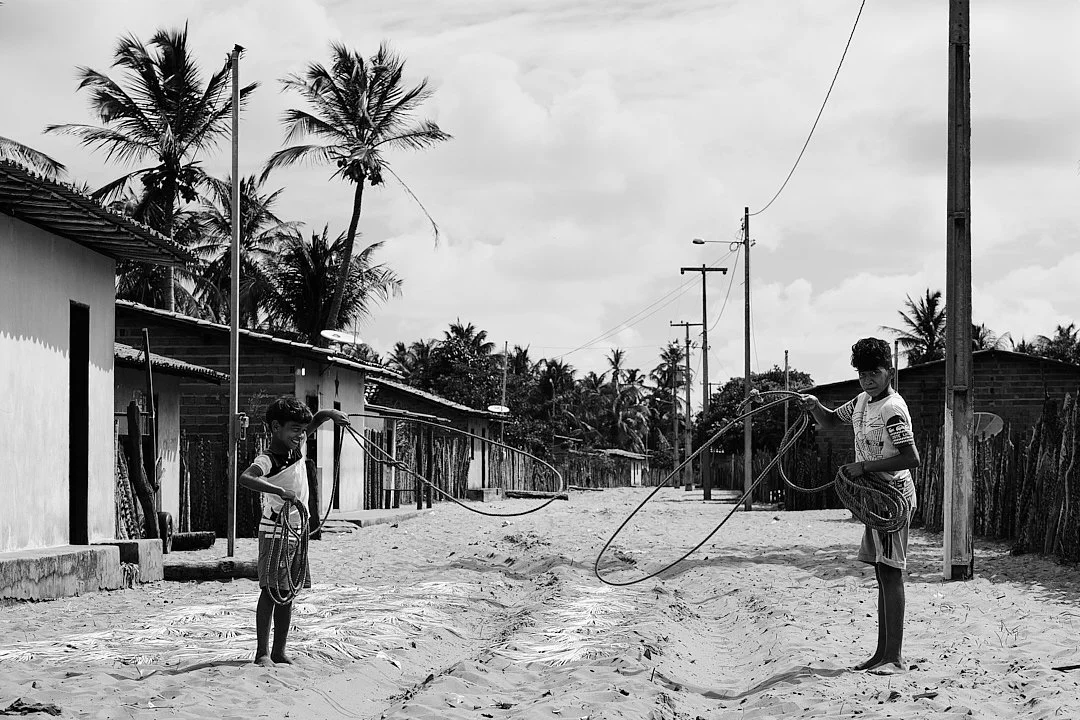
The streets of Travosa are sand. The boys play in them the same way their fathers did, with whatever is at hand. Two of them with lassos in the middle of the road, in no particular hurry, with nowhere else to be. The palm trees do not move. Neither does the afternoon.
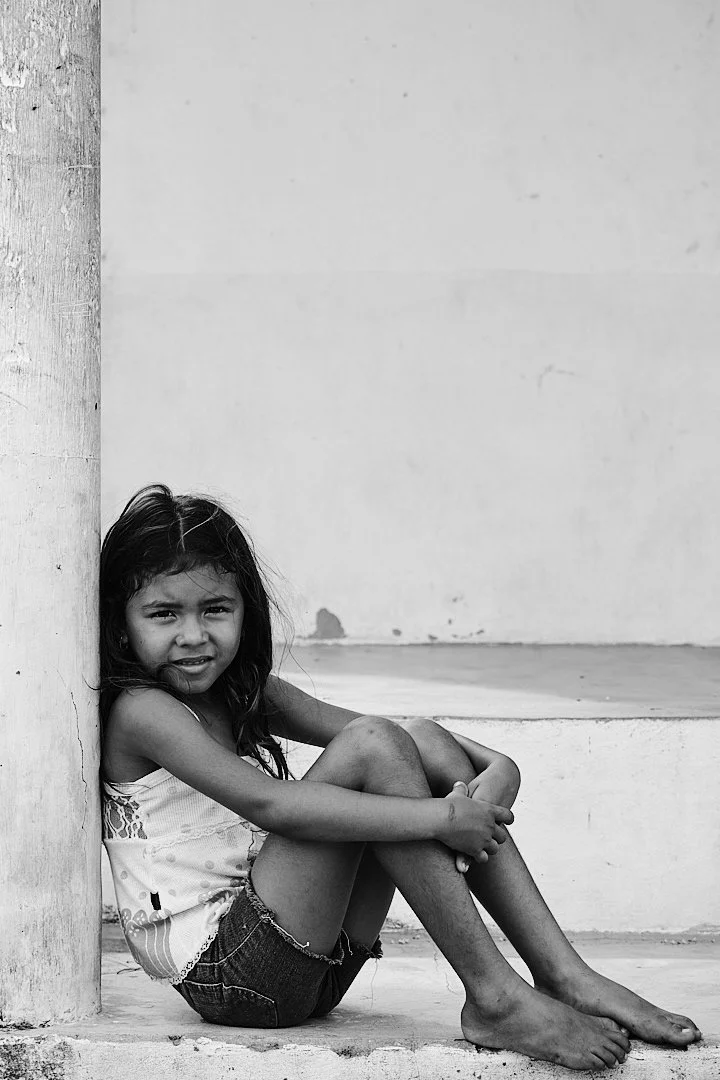
The children of Travosa grow up with the dunes at their back and the Atlantic at their feet. She leans against the worn plaster of a building older than she is, squinting into the light with the particular wariness of a child who has learned that strangers come and go. The sea is just behind her. It always is.
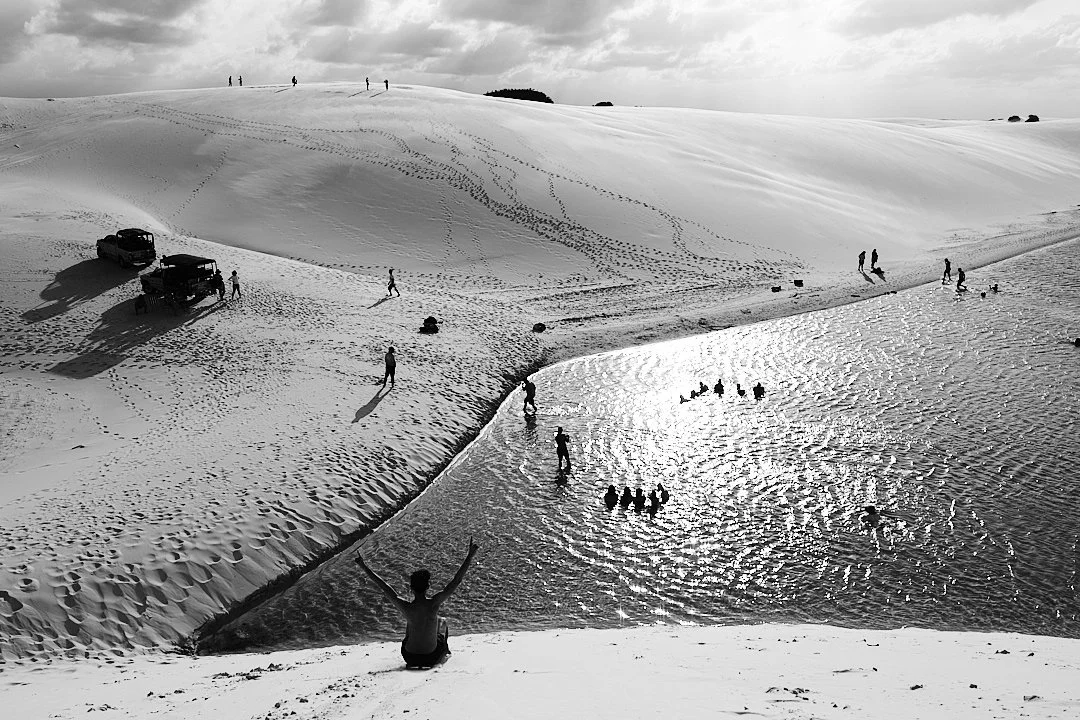
From above, the lagoon catches the sun and throws it back at the sky. Figures move through the water and across the sand in every direction. Jeeps sit at the edge where the sand hardens. The dunes go on past all of it. They were here before the village and they will be here after. The people of Travosa know this. They built their lives here anyway.
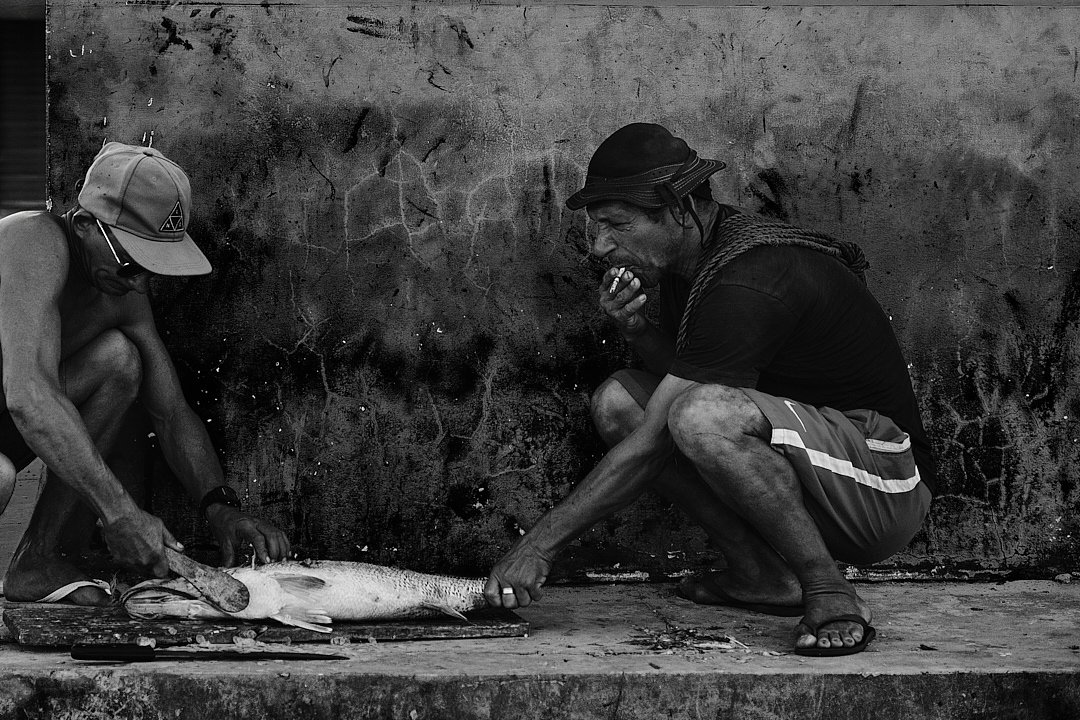
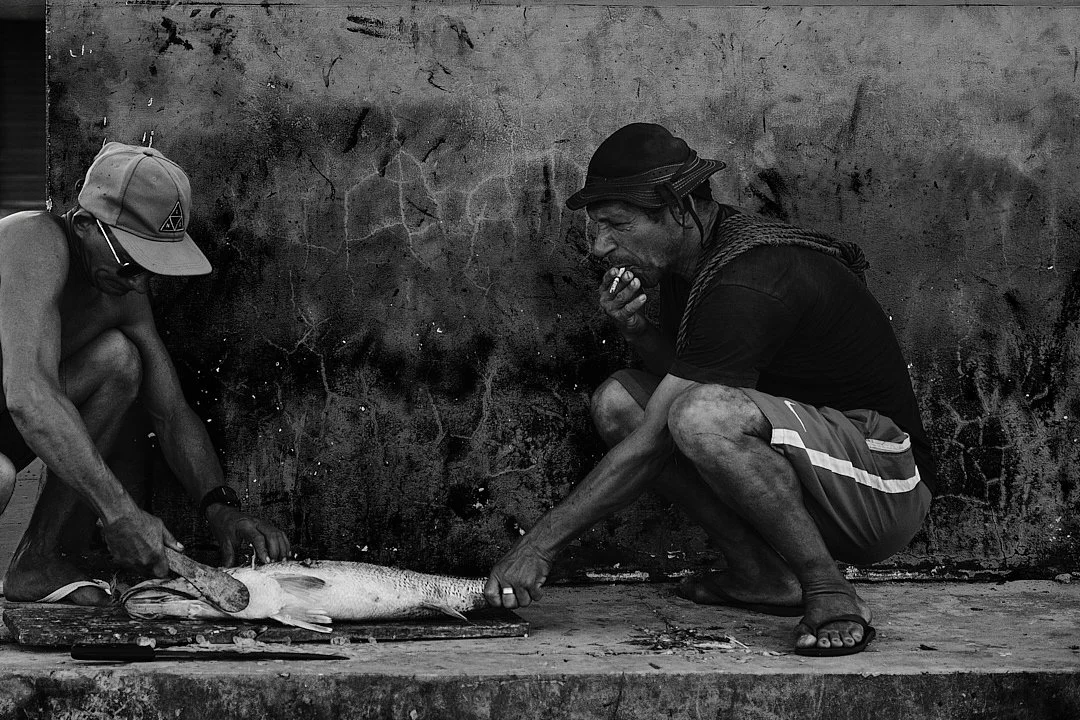
At the end of the day the catch comes in. One man works the knife while the other watches and smokes, a rope still looped around his neck from the boat. The wall behind them is dark and cracked and has heard this conversation a thousand times. Fish, weather, the sea. What tomorrow might bring.
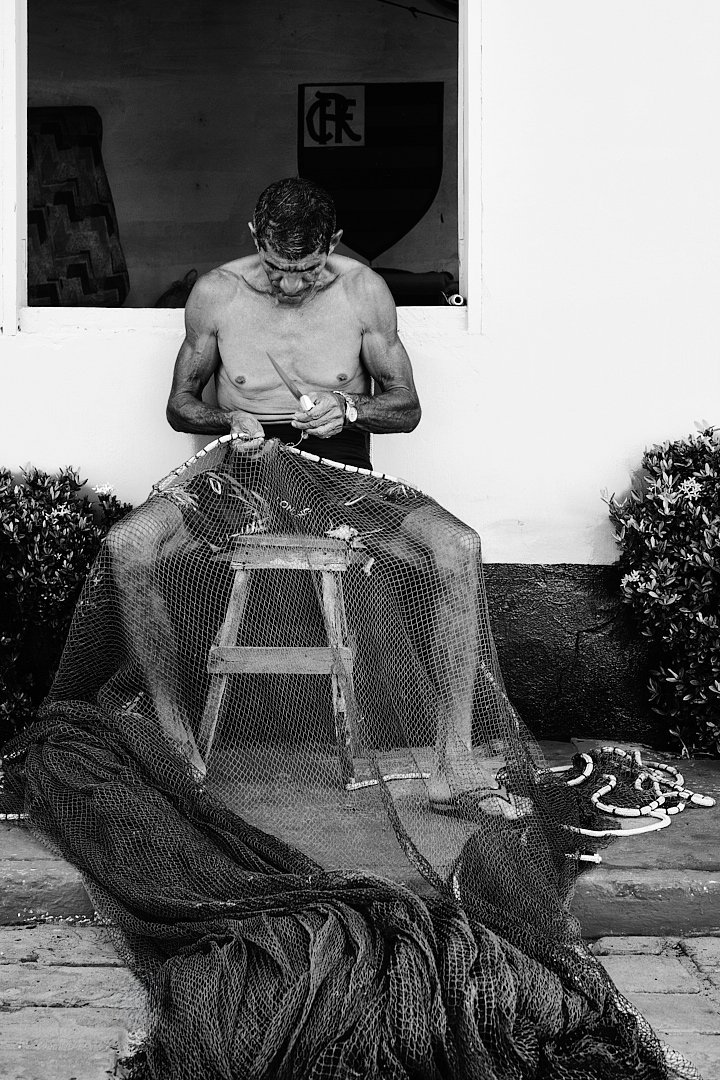
The nets never stay whole for long. He works through the damage methodically, needle moving through the mesh in a rhythm that needs no thought. The Flamengo crest on the wall behind him is the only color in the frame. Even here, football finds a way in.
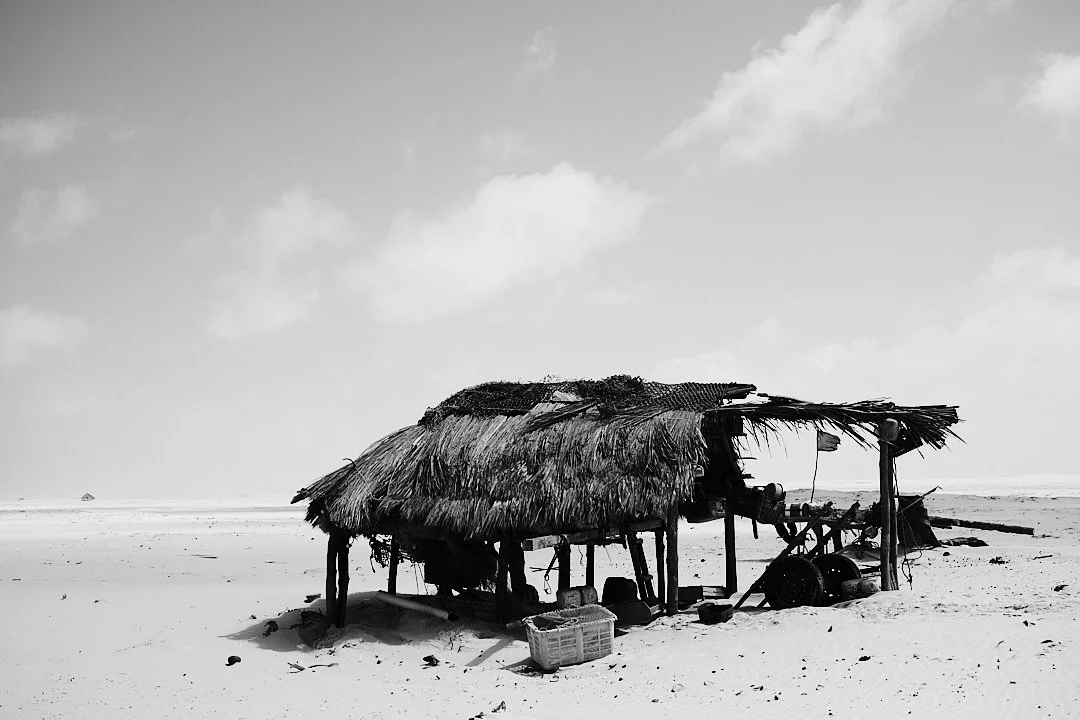
Not everything lasts. On the beach, a palm frond shelter leans into the wind, holding its gear and its nets and its ropes underneath like a man hunching against the cold. No one is here right now. Someone will be back.
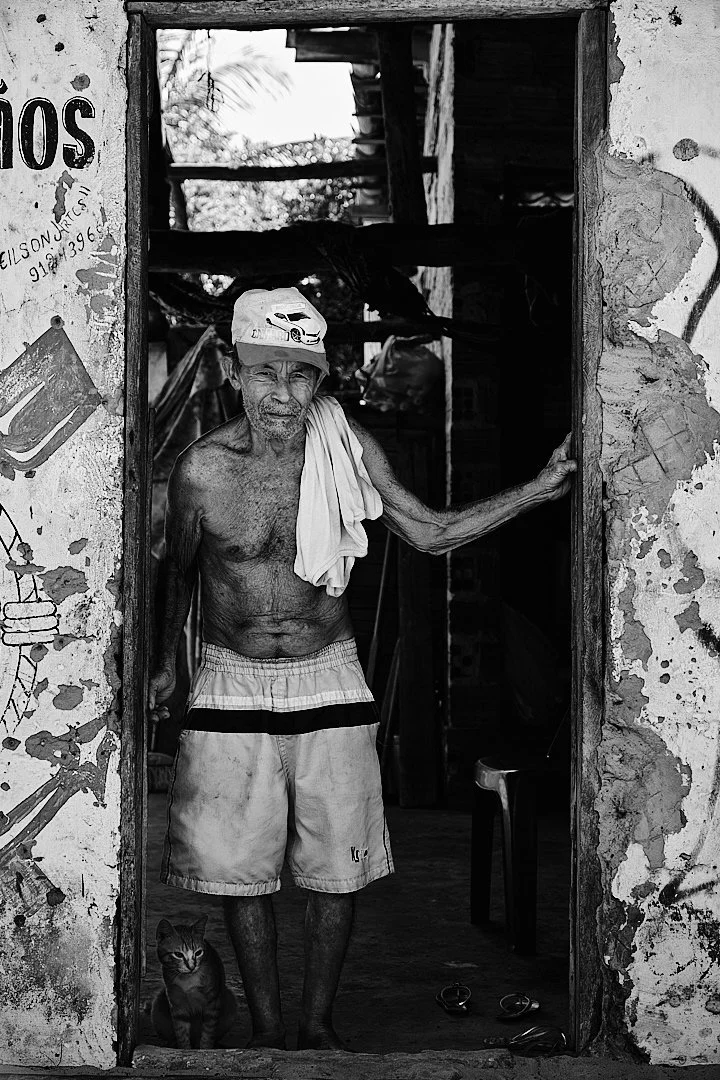
Daniel has lived in this doorway, or one very much like it, for most of his life. The cat at his feet is indifferent to the visitor. He is not. He stands with the ease of a man who has nothing left to prove, a towel over his shoulder, a small smile forming. We talked for a while. He told me the village was quieter now than it used to be. The young ones leave.
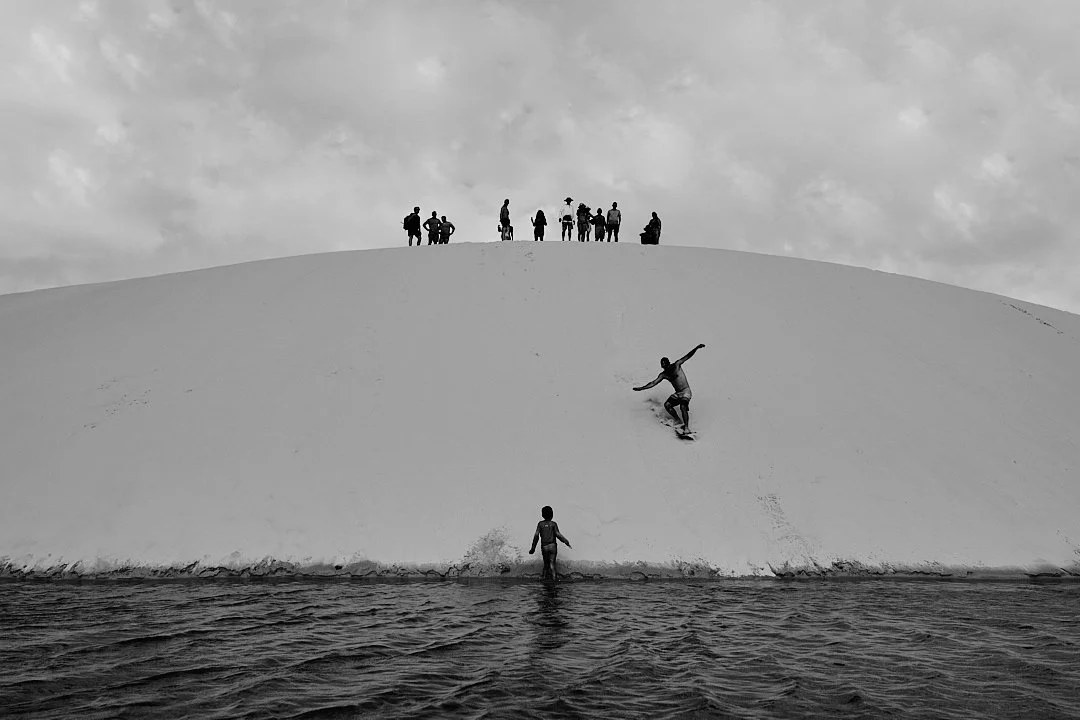
On weekends the dunes draw people from outside the village. A young man carves down the face of a dune on a board while a crowd watches from the ridge above. A child wades in the water at the base. The dunes belong to everyone but they started here, with the people of Travosa, long before anyone thought to slide down them.
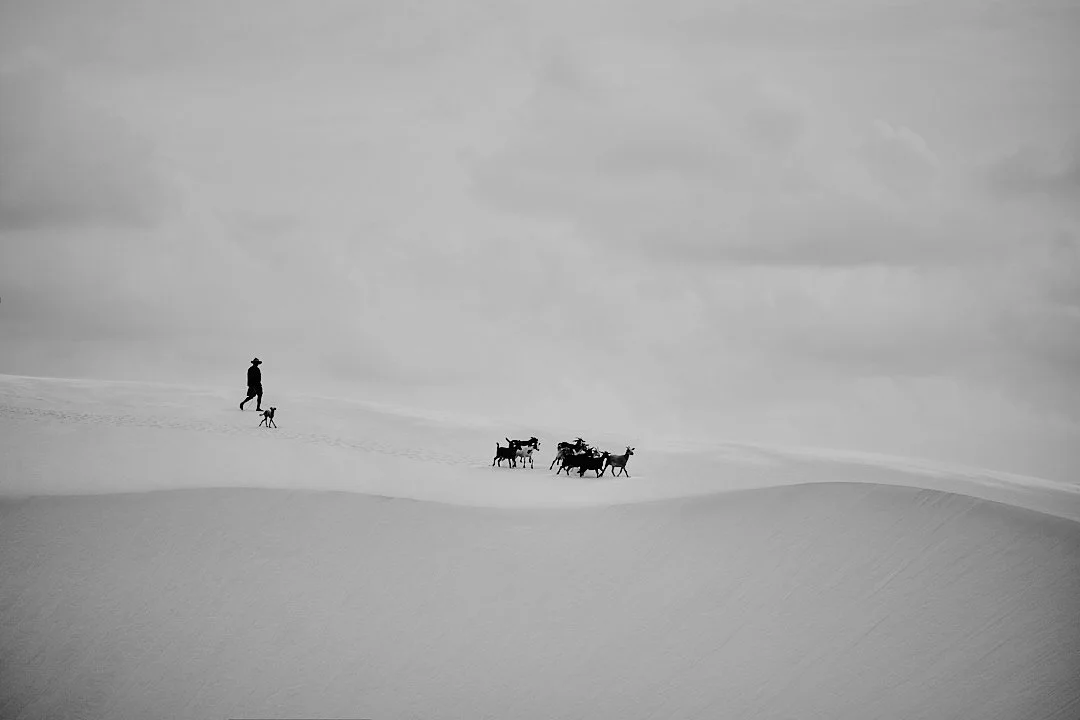
The dunes are not empty. Every morning a herder moves his goats across the sand, following paths that exist only in memory. The animals know the way. So does he. This is not tourism. This is Tuesday.
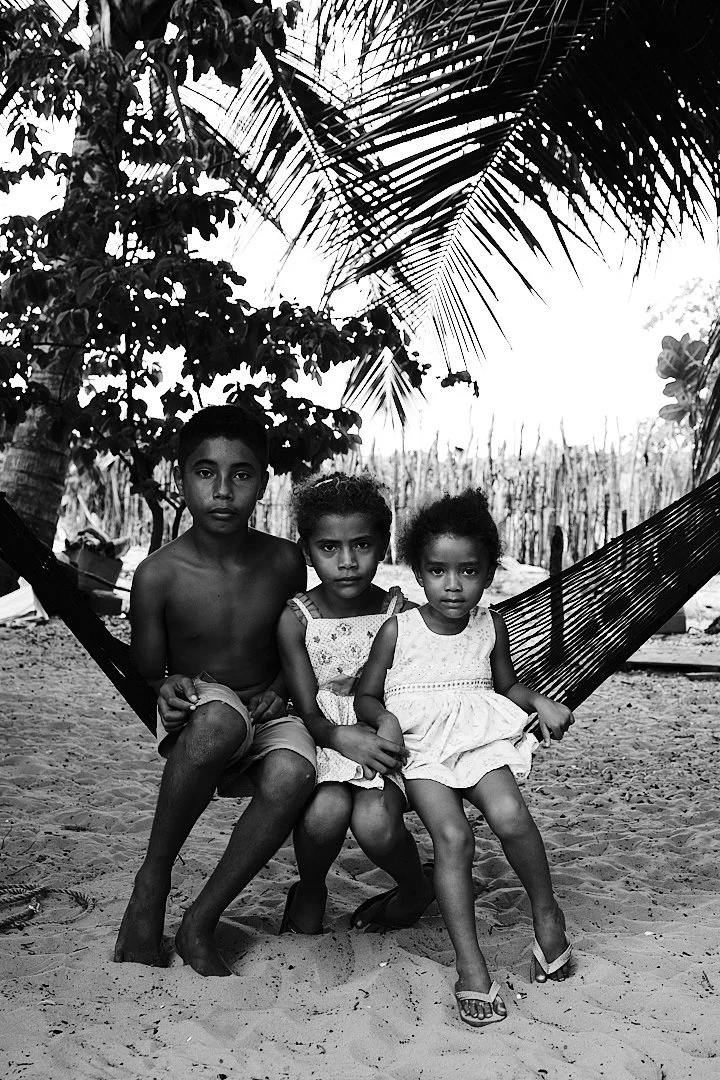
Three siblings sit together in a hammock strung between the palms, the oldest holding the younger two in place. They look at the camera without smiling, without performing. Just looking. There is a seriousness in their faces that has nothing to do with sadness. It is simply the look of children who know what their life is.
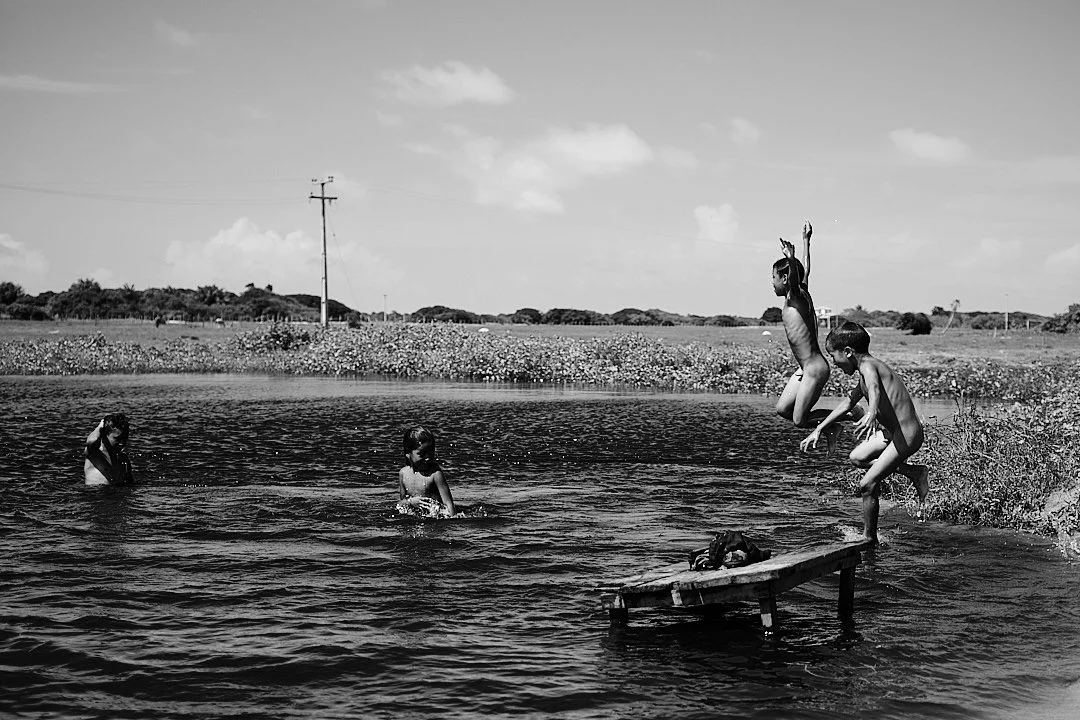
When the heat comes down the children go to the water. A plank of wood, a shallow lagoon, and the kind of afternoon that asks nothing of you. One boy launches himself into the air with his whole body. The others wait their turn. This is the other side of a hard life, the part that keeps going anyway.
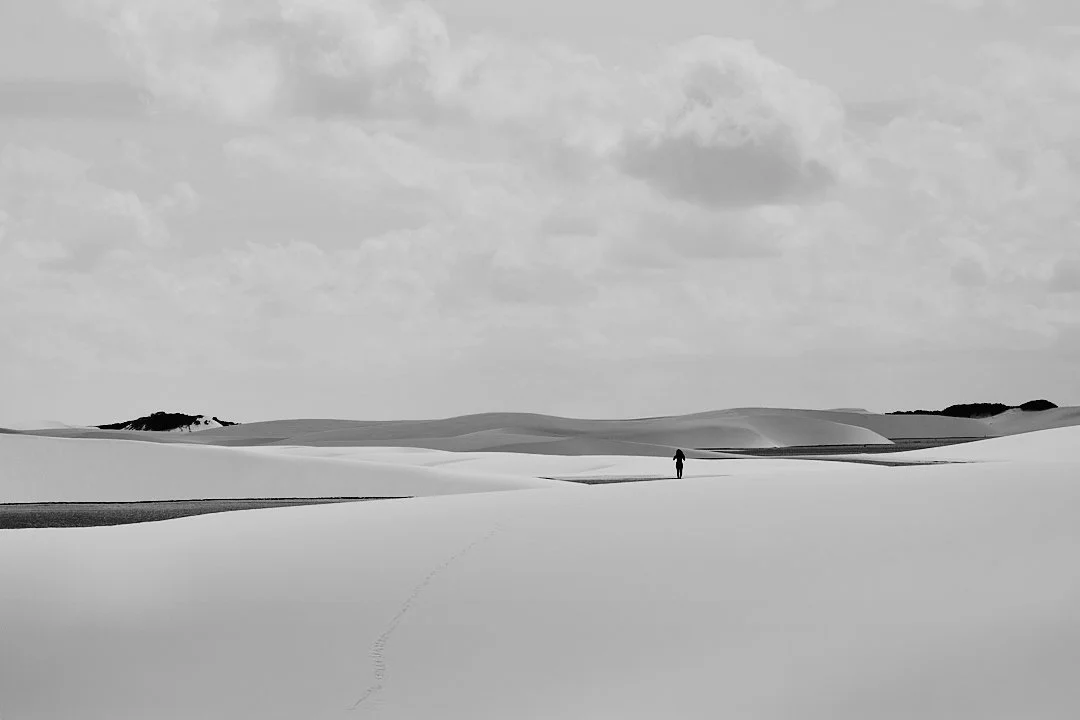
I left Travosa the way most people leave small places on foot first, then by road, then by distance. The man in the white shirt was still walking when I turned to look back. The dunes swallowed him slowly, the way they swallow everything eventually. But the village was still there. It always has been.
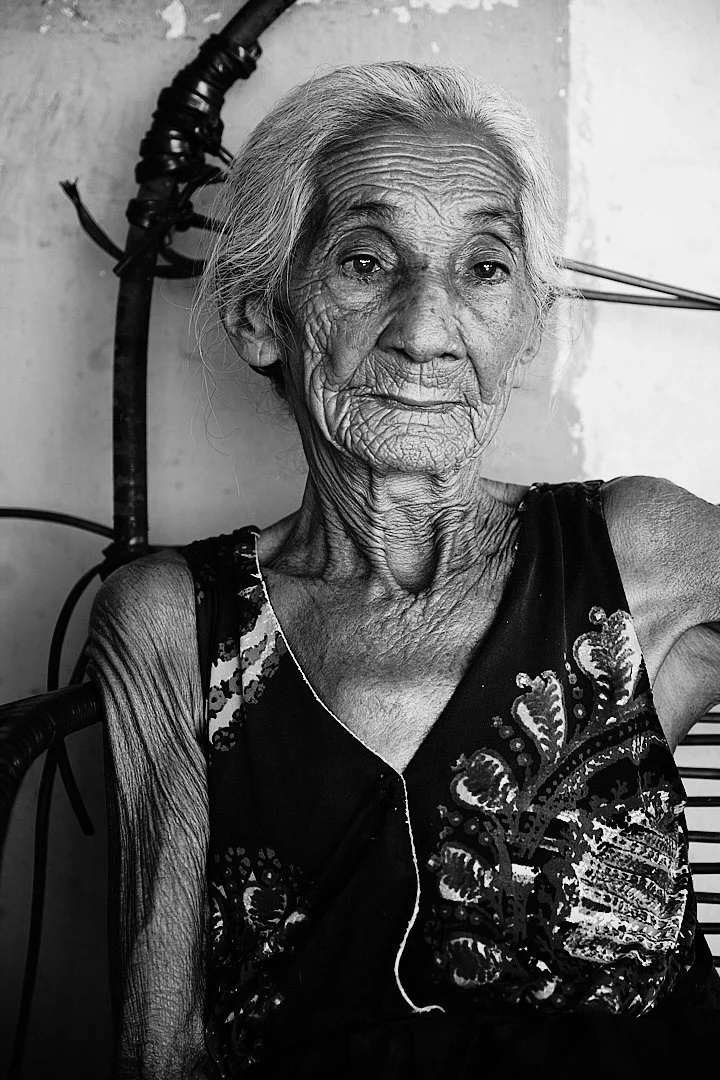
She sat with her hands in her lap and let me photograph her without asking why. Her face holds everything the dunes cannot — time, weather, loss, something close to peace. She has outlasted things that would have finished most people. She did not say this. She did not need to.
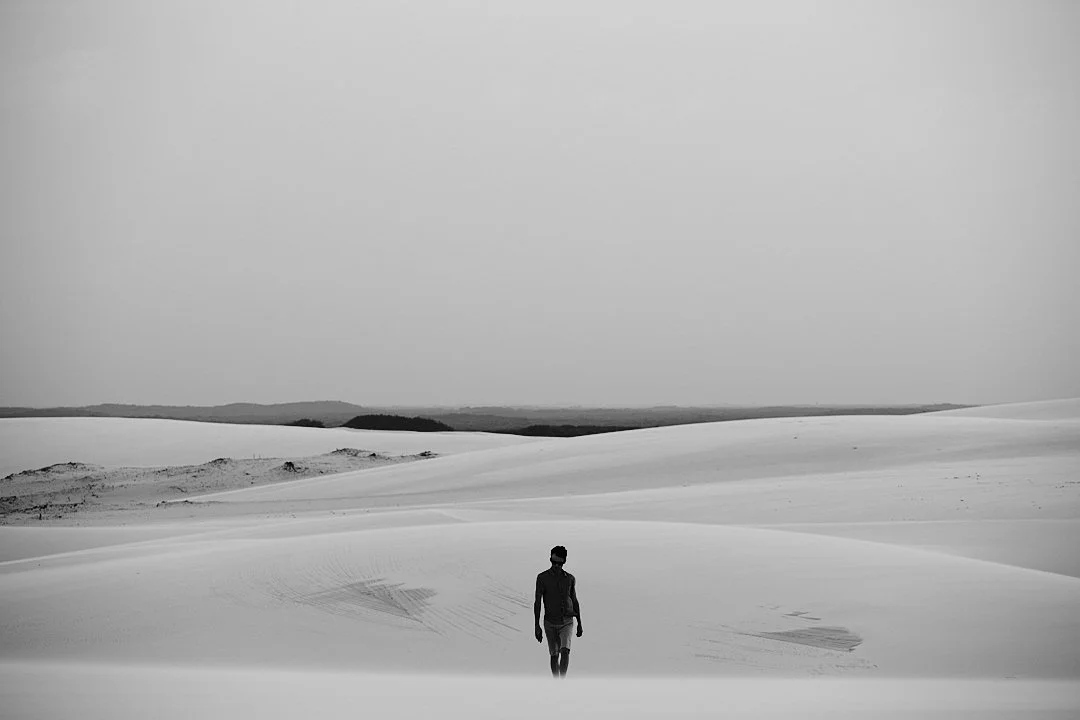
The dunes of Lençóis Maranhenses rise and fall like something the ocean left behind and forgot to take back. They stretch for miles in every direction, white and silent, interrupted only by the lagoons that form between them when the rains come. On the edge of this landscape, barely visible on most maps, sits Travosa. A povoado. A place where people have built a life out of what the land and the sea are willing to give.